Dec 16
TN House Republicans
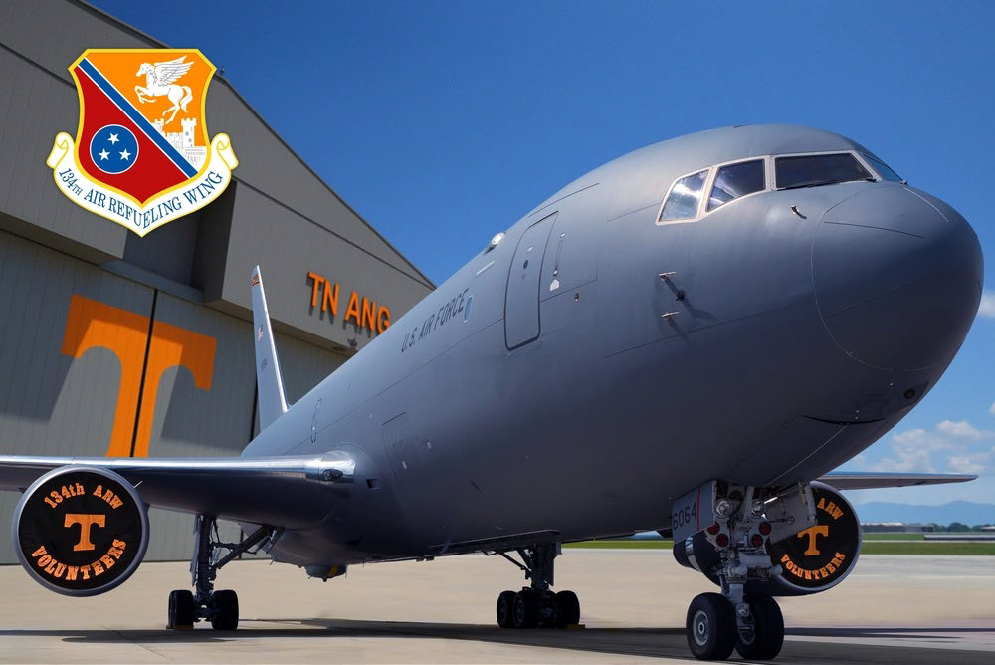
The Tennessee Air National Guard’s 134th Air Refueling Wing has been selected to receive the KC-46 Pegasus, the U.S. Air Force’s next-generation aerial refueling aircraft—a move that signals a major modernization milestone for one of the nation’s key refueling units and underscores the evolving needs of America’s air mobility fleet.
State Rep. Lowell Russell announced the decision recently, confirming that the Knoxville-based unit stationed at McGhee-Tyson Air National Guard Base will transition from its current aircraft to the KC-46 over the coming years. The selection positions East Tennessee as an important hub in the Air Force’s long-term refueling strategy.
A Strategic Upgrade for America’s Refueling Fleet
The KC-46 Pegasus was developed to replace the aging KC-135 Stratotanker, an aircraft that first entered service more than six decades ago and has been the backbone of U.S. aerial refueling operations since the Cold War. While the KC-135 has proven remarkably durable, the Air Force has increasingly emphasized the need for modern systems capable of supporting today’s global missions.
Designed with advanced avionics, improved defensive systems, and the ability to refuel a wide range of U.S. and allied aircraft, the KC-46 represents a significant technological leap. Its arrival in Tennessee reflects a broader national effort to ensure refueling capacity keeps pace with modern operational demands.
Local Advocacy Meets National Defense Priorities
The selection follows legislative efforts earlier this year in the Tennessee General Assembly. In February, Rep. Russell sponsored House Joint Resolution 36, which formally recognized the 134th Air Refueling Wing and urged the U.S. Air Force to consider the unit for the KC-46 mission.
The resolution received unanimous bipartisan support, passing the House by a 94–0 vote and the Senate by a 32–0 margin before being signed into law by the governor in early February. While such resolutions are symbolic, they often reflect broad state-level support for military installations and signal readiness to partner on future infrastructure and workforce needs.
Russell welcomed the announcement, describing it as recognition of the unit’s long-standing professionalism and service. “This decision reflects the exceptional work of the men and women of the 134th Air Refueling Wing and their unwavering commitment to serve,” he said in a statement.
Modernization and Workforce Development at McGhee-Tyson
According to the Tennessee Department of Military, the transition to the KC-46 is expected to bring infrastructure upgrades and expanded career opportunities to McGhee-Tyson Air National Guard Base. New aircraft typically require updated hangars, maintenance facilities, and training resources, all of which contribute to long-term investment at the installation.
The conversion process will take place in phases over several years, with construction and training milestones scheduled incrementally. During that time, airmen assigned to the 134th will undergo specialized training to operate and maintain the new aircraft, supporting workforce development and technical skill growth within the Guard.
For the surrounding region, such transitions often bring economic ripple effects, from construction activity to sustained employment tied to base operations—though officials emphasize the primary focus remains mission readiness and national defense.
A Unit with a Growing National Role
The 134th Air Refueling Wing has played a critical role in air mobility missions, supporting both domestic operations and overseas deployments. As aerial refueling remains a cornerstone of U.S. airpower—enabling long-range missions, rapid response, and global reach—the unit’s modernization aligns it with future operational needs.
By housing the KC-46, the Tennessee Air National Guard joins a select group of units nationwide entrusted with operating the Air Force’s newest refueling platform. The move also reinforces the Guard’s dual mission: supporting federal defense requirements while remaining ready to respond to state and regional emergencies when called upon.
Looking Ahead
While the aircraft transition will unfold over time, the selection itself marks a clear vote of confidence in the 134th Air Refueling Wing. As the Air Force continues to modernize its fleet, decisions like this highlight how state-based Guard units remain integral to national defense strategy.
For East Tennessee, the announcement represents continuity and change—honoring decades of service while preparing the unit and its airmen for the next generation of missions in an increasingly complex global security environment.
RECENT

Arizona Shines Light on Pediatric Cancer
cancer

Kid Rock Tops Billboard Christian Chart with “‘Til You Can’t”
Entertainment

Prosecutor Moers Highlights Justice With Impact
In The States

Kids Pitch New Laws in Pennsylvania Civics Contest
Education

Fred Rogers and the Courage of Kindness
Kindness

70 Years Later, “The Auctioneer” Still Rings True
Entertainment

DCS Under Scrutiny in Arizona Capitol Hearing
Childhood

Why Visualization Is Not Optional—It’s Essential
Friday Fuel

Arizona House Cracks Down on Weapons Trafficking
In The States

Breaking the Cycle: Healing Patterns That Shape How We Love
Health & Wellness
BE THE FIRST TO KNOW
Want to stay in the loop? Be the first to know! Sign up for our newsletter and get the latest stories, updates, and insider news delivered straight to your inbox.
More Content By
Think American News StaffArizona Shines Light on Pediatric Cancer
cancer
Kid Rock Tops Billboard Christian Chart with “‘Til You Can’t”
Entertainment
Prosecutor Moers Highlights Justice With Impact
In The States
Kids Pitch New Laws in Pennsylvania Civics Contest
Education
Fred Rogers and the Courage of Kindness
Kindness
70 Years Later, “The Auctioneer” Still Rings True
Entertainment
DCS Under Scrutiny in Arizona Capitol Hearing
Childhood
Arizona House Cracks Down on Weapons Trafficking
In The States

Tragedy Fuels Push for Public Safety Changes in Indiana
In The States

Arizona Honors Deputies After Child Rescue
In The States
View All Content By Think American News Staff