Dec 17
DHS Launches “Worst of the Worst” Immigration Database
Adobe Stock/Miha Creative

A new federal transparency tool is giving Hoosiers a clearer look at immigration enforcement activity in their own backyards.
The U.S. Department of Homeland Security has launched what it calls the “Worst of the Worst” website, a searchable public database that allows residents to see examples of criminal illegal aliens who have been removed from communities across the country. According to state officials, the database includes removals from multiple Indiana locations, including Greencastle.
Indiana State Rep. Beau Baird says the tool provides information many families have long wanted access to — not speculation, but documented enforcement actions already taken by federal authorities.
“Hoosiers deserve to know about the dangerous criminal illegal aliens in their communities,” Baird said. “This new tool brings transparency and accountability, while ensuring families have access to information that keeps them aware and safe.”
What the ‘Worst of the Worst’ Website Does — and Does Not Do
The DHS website is not a real-time crime tracker, nor does it list individuals currently living in a community. Instead, it focuses on criminal illegal aliens who have already been apprehended and removed from the United States. The site allows users to search by geographic area and see examples of removals that have occurred, offering a snapshot of enforcement activity rather than an alert system.
Federal officials say the goal is to provide clarity about how immigration laws are being enforced, particularly in cases involving individuals with criminal records. By making this information publicly accessible, DHS aims to show where enforcement efforts are happening and to counter misinformation surrounding immigration policy.
For state lawmakers like Baird, the database also reinforces the idea that transparency plays a role in public safety, especially when state and federal authorities are working together.
Indiana’s Effort to Strengthen Law Enforcement Coordination
The launch of the DHS database follows recent legislative action in Indiana aimed at improving communication between local law enforcement and federal immigration agencies.
Earlier this year, Baird supported House Enrolled Act 1393, a law designed to ensure that when individuals accused of crimes are arrested, there is a clear process for notifying the appropriate authorities if there is probable cause to believe the individual is not lawfully present in the United States.
Under the law, when a law enforcement officer arrests someone for a felony or misdemeanor and probable cause exists regarding unlawful presence, the jail or detention facility must notify the county sheriff during the intake process. The sheriff is then required to notify the proper federal authority.
Supporters say the law does not change who is arrested or charged, but rather ensures that existing immigration laws are enforced consistently when criminal activity is involved.
How the Law Moved Through the Legislature
House Enrolled Act 1393 was authored by Rep. Garrett Bascom and co-authored by Reps. J.D. Prescott, Jim Lucas, and Zach Payne. In the Senate, the bill was sponsored by Sens. Aaron Freeman, Scott Baldwin, Eric Koch, Randy Maxwell, and Michael Young.
The legislation advanced steadily through the General Assembly during the 2025 session, reflecting broad agreement among lawmakers that better coordination was needed. The bill was signed by the Speaker of the House on April 17, 2025, followed by the President Pro Tempore of the Senate and the President of the Senate later that month. It received the governor’s signature on April 30, 2025, becoming Public Law 121.
Connecting State Policy With Federal Enforcement
Baird has also been involved in discussions beyond the Statehouse about how Indiana can work more closely with federal agencies. In October, he joined fellow lawmakers in a briefing with national security experts Tom Homan and Chad Wolf to discuss ways states can partner with the federal government to enforce immigration laws.
Those discussions, Baird has said, focused on practical coordination — ensuring information flows properly between agencies and that criminal activity is addressed without confusion over jurisdiction.
The DHS “Worst of the Worst” website, combined with Indiana’s recent legislative changes, reflects that same approach: clearer communication, clearer roles, and clearer information for the public.
Transparency as a Public Safety Tool
For supporters, the new DHS database is less about politics and more about visibility. They argue that when enforcement actions are hidden from view, public trust suffers. When information is accessible and factual, communities are better equipped to understand how laws are being applied.
As the federal database continues to be updated, Indiana residents now have another way to see how immigration enforcement intersects with criminal justice — and how state and federal policies are being aligned to address serious offenses.
RECENT

‘American Pie’ Turns 55 on Tour
Entertainment

Senior Expo Offers Help and Support in Bucks County, PA
Community

California Moves to Rename Chávez Day
In The States

A Very American Tuesday: Puppies, Philly & Pours
Offbeat Observances

Cash or Card? New York Says Both
In The States

Country Newcomer Delivers Raw Finale
Entertainment
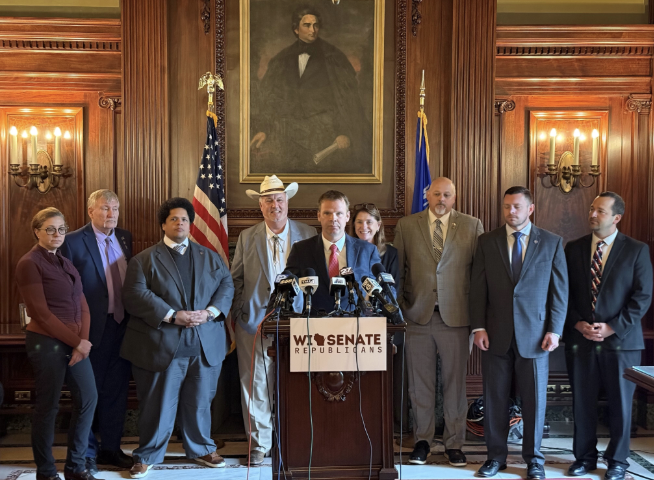
End of an Era: Devin LeMahieu Declines Reelection Bid
In The States

Kelly Lang Teases New Album with Latest Single
Entertainment

Hello Spring, Hello Plans
Dating

Arizona Targets Youth Nicotine Sales
Health & Wellness
BE THE FIRST TO KNOW
Want to stay in the loop? Be the first to know! Sign up for our newsletter and get the latest stories, updates, and insider news delivered straight to your inbox.
More Content By
Think American News Staff‘American Pie’ Turns 55 on Tour
Entertainment
Senior Expo Offers Help and Support in Bucks County, PA
Community
California Moves to Rename Chávez Day
In The States
Cash or Card? New York Says Both
In The States
Country Newcomer Delivers Raw Finale
Entertainment
End of an Era: Devin LeMahieu Declines Reelection Bid
In The States
Kelly Lang Teases New Album with Latest Single
Entertainment
Hello Spring, Hello Plans
Dating
Arizona Targets Youth Nicotine Sales
Health & Wellness

Kentucky Senate Leader Pushes Back on Veto
Education
View All Content By Think American News Staff